Condo Parcel Lockers: Buy Outright or Choose Managed Hosting?
Compare purchase and managed hosting for Singapore condo parcel lockers: upfront cost, resident support, software, reporting and exit terms.
By Latchwork Published 5 min read
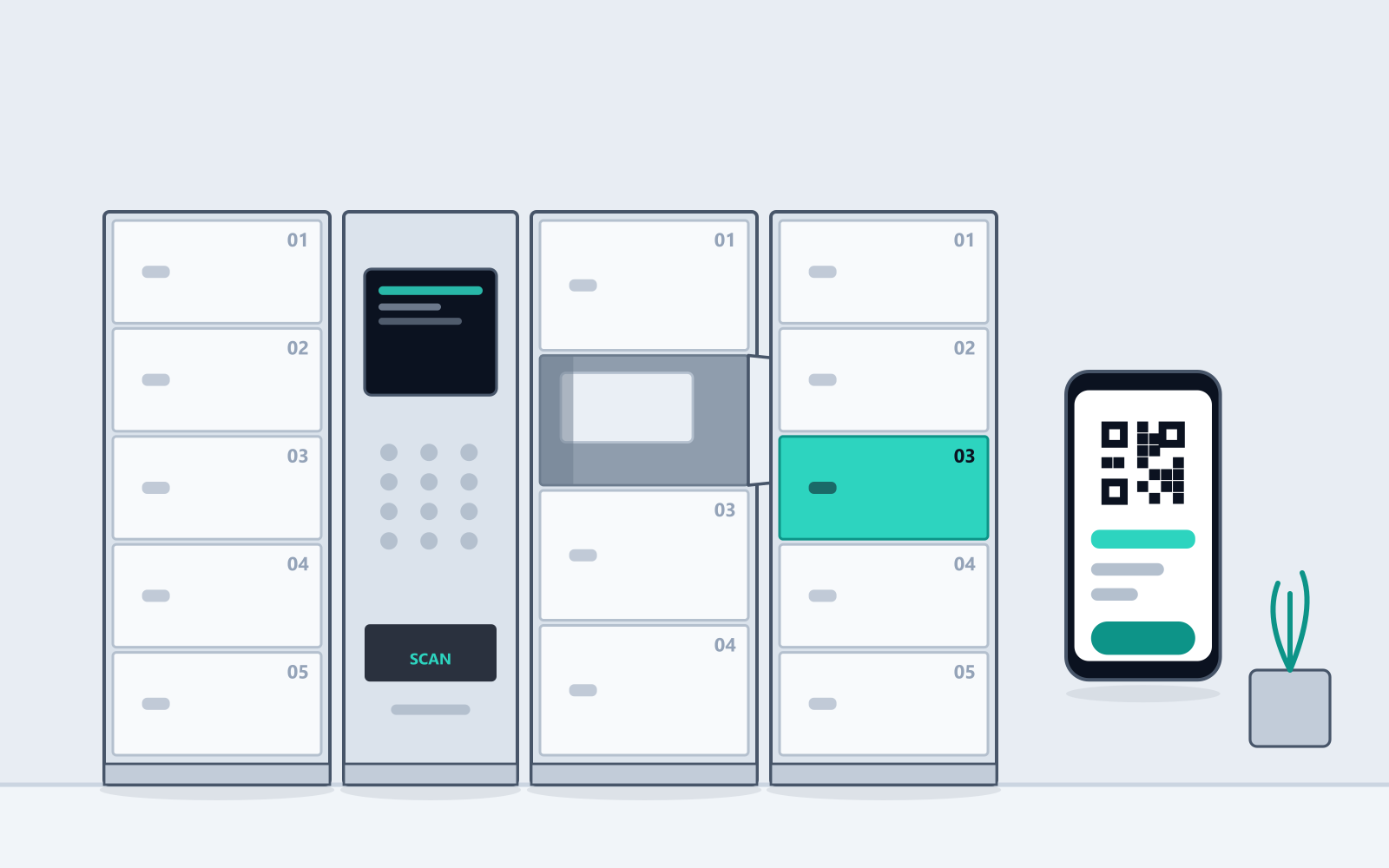
For a Singapore condominium, buying a parcel locker bank and hosting one under a managed arrangement can solve the same delivery problem but create very different responsibilities for the MCST and managing agent. The right comparison is not “free lockers versus paid lockers”. It is who funds the equipment, who answers residents, who pays for software and servicing, who receives any revenue, and what happens when the agreement ends. Ask suppliers to price the same bank and operating period both ways.
The parcel workflow is the same decision in both models
A parcel locker is a handover system, not merely a cabinet with locks. A courier deposits an item while the resident is absent; the resident receives access and collects later; the system records the drop and collection. Latchwork therefore offers its parcel and deposit lockers with connected access rather than a standalone key or keypad. The hardware decision—bank size and compartment mix—should be settled before the financing decision is compared.
The existing condo parcel-locker sizing guide explains how to use a count of real deliveries and collection times rather than unit count alone. If one proposal prices a small bank and the other a large one, a lower headline price tells the council little. Put one agreed layout, site position and expected service level in both requests.
Buying gives the estate ownership and day-to-day control
Under Latchwork’s supply-and-install model, the estate pays for the cabinets and connected access hardware. Latchwork specifies, supplies and installs the bank, sets up the platform and trains staff. The MCST owns the asset and retains any locker revenue it decides to charge; the estate also pays the annual platform subscription per bank and carries day-to-day administration through the dashboard.
Buying can fit a council that has a capital budget, wants the bank as a lasting estate asset and is comfortable assigning a person or supplier to ongoing operations. Ownership alone does not make support free: the quotation should separate the initial equipment and installation from software, warranty, servicing, repairs and the staff time needed for resident questions. Ask who answers an access problem outside office hours and who authorises an overdue-parcel intervention.
Managed hosting moves funding and operations to the provider
Under Latchwork’s managed locker model, Latchwork funds and installs the connected bank, insures and services the arrangement, handles user payments and queries, and provides regular reporting. The estate supplies an agreed footprint and a standard power socket. In return for hosting the bank, it receives a quoted fixed monthly rental or a share of locker revenue. The estate does not own the equipment and should not assume that the same revenue flows to it as under a purchase.
Managed hosting can be useful when the council wants to test real usage without buying a bank, or when resident support and maintenance should sit with one supplier. It is still a commercial arrangement on common space. A “no capital outlay” label is not a substitute for checking placement, access, insurance, service levels and the estate’s own approval process. The written terms matter more than the label.
| Decision point | Buy outright | Managed hosting |
|---|---|---|
| Equipment funding | Estate pays for the bank and access hardware | Latchwork funds the bank and installation |
| Asset ownership | Estate owns the bank | Latchwork retains the bank |
| Platform | Estate pays the agreed annual subscription | Included in Latchwork’s operating arrangement |
| Resident support | Estate administers access, with contracted supplier support | Latchwork handles user support and day-to-day issues |
| Locker revenue | Estate keeps revenue it charges | Latchwork operates the revenue stream and pays agreed rental or share |
| End of arrangement | Estate retains the asset and plans future service | Removal and making good should be set out in the agreement |
Neither column is automatically cheaper for every estate. A purchase concentrates cost at the start but leaves an owned asset; managed hosting avoids that purchase while the provider carries operating work and risk. Compare the total quoted cash flows and obligations over the period the council actually expects to use the bank. Do not invent a break-even year from an unrelated estate’s numbers.
Write down the work that is easy to overlook
The managing agent needs an answer to operational questions before the bank arrives. Who tells residents how to collect? Who handles a phone number entered incorrectly by a courier? Who can open a disputed compartment, and how is that action recorded? What reminder schedule applies to parcels left for days, and where do overdue items go if the estate’s policy permits staff removal? A connected platform can log events and send reminders, but the estate must still approve the physical handling process.
Under a managed arrangement, Latchwork’s proposal should make its support contact, escalation route, site attendance and monthly report explicit. Under a purchase, the managing agent should nominate the administrator, check training and define the maintenance contract. In both cases, ask for the insurance limits and exclusions in writing. A platform log helps investigate a dispute; it does not replace a clear allocation of responsibility for lost or damaged property.
Compare two proposals on one page
Give each bidder the same brief: the delivery count and parcel-size sample, proposed location, available socket, expected access hours, resident notification workflow and any site constraints. Ask for a drawing showing the controller, door mix, dimensions, door swing and clearance. Then compare these lines side by side:
- Initial and recurring payments: equipment, installation, platform, service, payment handling and electricity responsibilities.
- People and response: resident contact, courier support, escalation, site attendance and reporting frequency.
- Risk: equipment insurance, limits for parcels, access-log retention and who resolves a disputed handover.
- Term and exit: pilot or contract length, renewal, notice, removal, reinstatement, and handling of parcels still in the bank.
The condominium solutions page shows why parcel lockers may sit beside simpler gym or pool lockers on the same estate; their access and commercial models need not match. For a decision-ready comparison, send the site brief through the quotation form and request an outright-purchase option and a managed-hosting option against the same parcel-bank drawing. Ask the council and managing agent to confirm the approval path for whichever arrangement they choose.
Where this applies
Quick answer: Should our Singapore condominium buy parcel lockers or use a managed hosting model?
A Singapore condominium should compare purchase and managed hosting against the same parcel-bank layout and service period. Buying makes the MCST the asset owner and keeps any locker revenue with the estate, but requires upfront funding, a platform subscription and an operating plan. Under Latchwork managed hosting, Latchwork funds, installs, insures and operates the connected bank while the estate provides space and a socket and receives an agreed rental or revenue share. Neither model removes the need to agree placement, resident support, liability limits and end-of-term removal in writing.
- Buy outright
- MCST owns the asset
- Managed hosting
- Latchwork funds and operates
- Parcel access
- Connected in both models
- Compare
- Same bank and service period
Questions people also ask
Does a managed parcel locker cost the MCST anything upfront?
Latchwork’s managed model funds the cabinets, installation, insurance and operation rather than asking the host estate to purchase them. The estate provides a suitable footprint and a standard power socket; the written proposal should state any site-specific obligations or costs before approval.
Who handles resident queries in a managed parcel locker arrangement?
Latchwork handles user payments, support, reminders and access problems under its managed model, with residents directed to Latchwork rather than the management office. The hosting agreement should describe escalation, service visits and monthly reporting so the managing agent knows exactly what remains on its desk.
Can an MCST buy the parcel bank but still get support?
Latchwork’s supply-and-install model includes specification, installation, platform setup, training, warranty and support. The estate owns the bank, pays the agreed platform subscription and administers day-to-day access; maintenance scope and response arrangements should be listed in the quotation.
Does managed hosting avoid the need for council approval?
A managed hosting proposal still needs the estate’s appropriate review and permission for the chosen site, even though Latchwork funds the equipment. The council and managing agent should confirm their own approval route for the footprint, power, signage, commercial terms and agreement.
What happens when a managed parcel locker agreement ends?
Latchwork’s managed offer includes removing the bank and making good the space when the arrangement ends. The signed agreement should identify notice periods, outstanding parcels, data and report handover, insurance limits and the exact reinstatement obligation rather than relying on a general promise.