How Many Parcel Lockers Does a Condo Need? A Sizing Guide
Size a condo parcel locker from peak deliveries and collection time, not unit count: the two-week count, the compartment mix, and how to start small and extend.
By Latchwork Published 5 min read
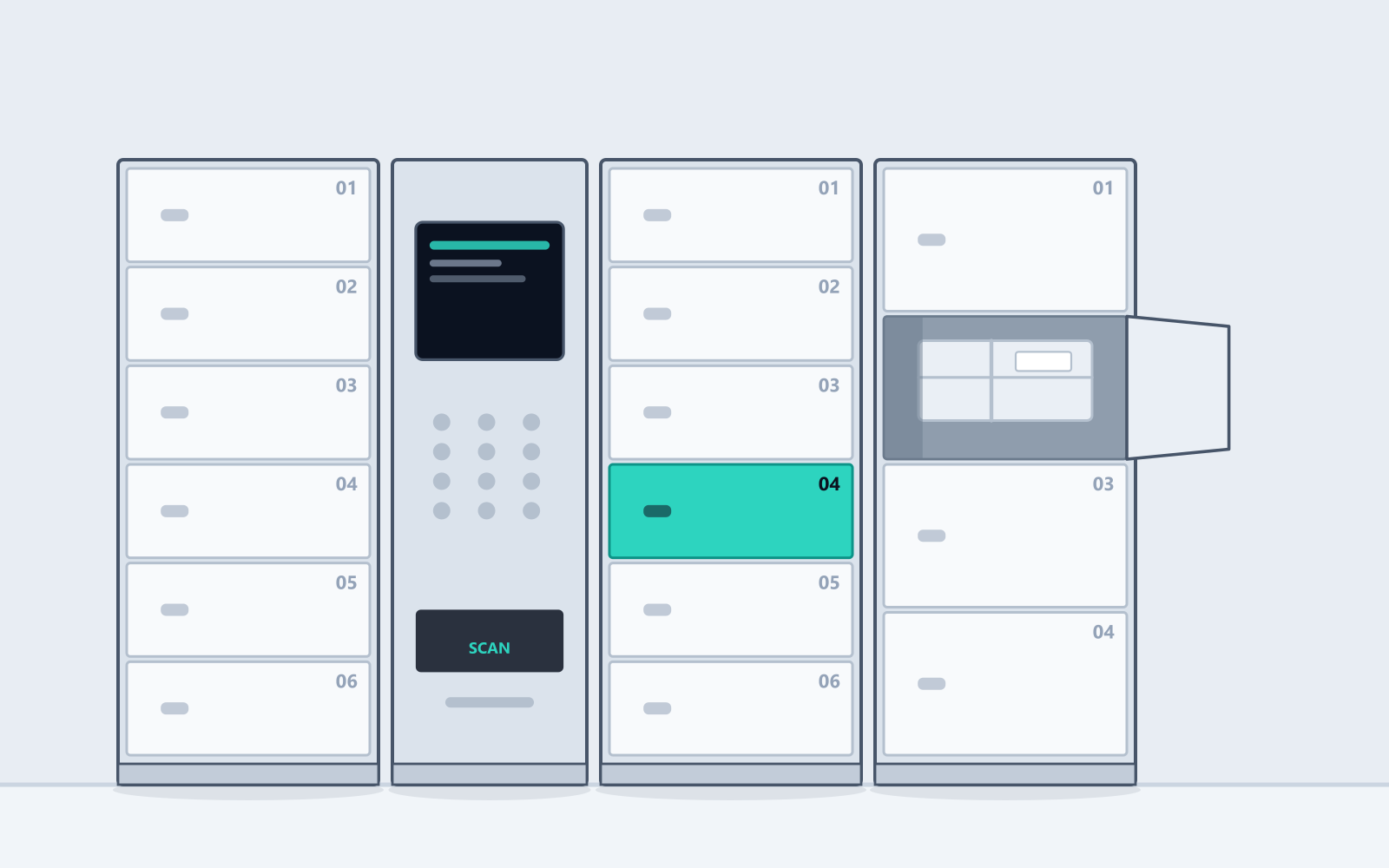
A condo parcel locker should be sized from how many deliveries arrive on the busiest day and how long residents take to collect them, not from the number of units. Two estates with the same number of units can see very different delivery volumes, and a bank sized by rule of thumb either fills by mid-morning or wastes lobby space and money. The reliable method is a two-week count of real deliveries, which is what Latchwork sizes every bank from.
This guide sets out the sizing method, what to record during the count, how to choose the mix of compartment sizes, and how to start with a smaller bank and extend it.
Size for the busiest day, multiplied by the wait
The number of compartments a parcel locker needs is the number of parcels in it at the busiest moment. That depends on two things: how many deliveries arrive in a day, and how many days a parcel sits before its owner collects it.
Compartments needed ≈ deliveries on the busiest day × average days before collection
This is ordinary queueing arithmetic (queueing theorists call it Little’s law), and it explains why unit count is a poor guide. It also shows the two ways to make a bank go further: more compartments, or shorter waits.
A worked example, with illustrative figures rather than a benchmark:
| Scenario A | Scenario B | |
|---|---|---|
| Busiest day in the two-week count | 40 deliveries | 40 deliveries |
| Average wait before collection | 1.5 days | 1 day, with automatic reminders |
| Compartments occupied at the peak | about 60 | about 40 |
| A bank that covers it | 36-compartment bank plus two 12-compartment extension bays | 36-compartment bank plus one small extension bay |
Add some headroom on top of the peak, because two weeks of counting will not capture every busy spell. Delivery volumes are not flat through the year, and a bank sized exactly to an ordinary fortnight can run full during a sale season.
Get the numbers from a two-week count
A two-week count by the management office or guardhouse gives you both figures, and it is the step most installations skip. For each delivery, record:
- The date and time it arrived, so you can find the busiest day, including weekends.
- Its rough size: fits in a shoebox, larger than a shoebox, or oversized (hampers, bulky boxes).
- When it was collected, so you know how long parcels actually wait.
Two weeks is long enough to include both weekends and a normal spread of weekday deliveries, and short enough that the office will actually do it. If the count happens to fall in an unusually quiet or busy period, note it so the figure can be adjusted.
The compartment mix matters more than the total
Once you know the total, the split between compartment sizes decides whether it works. A residential estate typically needs many small compartments and a few oversized ones for shoeboxes, hampers and bulky boxes. Get the mix wrong and a bank with free compartments still turns away the parcels that actually arrive.
The size column of the count gives you the split directly. Latchwork’s bank configurations then fit around it:
| Configuration | Compartments | Size (W × D × H, mm) |
|---|---|---|
| 12-compartment bank | 12, mixed sizes | 850 × 460 × 1800 |
| 24-compartment bank | 24, mixed sizes | 1700–1770 × 460 × 1800 |
| 36-compartment bank | 36, mixed sizes | 2550 × 460 × 1800 |
| Extension bay | 6–12 per bay | 425–850 × 460 × 1800 |
| Outdoor bank with canopy | configured per site | made to order |
The standard banks and extension bays are all 460 mm deep and 1800 mm tall, so the count translates directly into wall length. The full specification is on the parcel locker page.
Shorter waits are the cheapest capacity
Reducing how long parcels sit is cheaper than buying more compartments. In the worked example above, cutting the average wait from a day and a half to a day removes a third of the compartments needed.
Three platform features do this on a Latchwork parcel bank:
- Automatic reminders go to residents on a schedule the estate sets.
- A longest-held report shows which compartments have been occupied longest.
- Overdue release, where estate policy allows it, frees a compartment by releasing the item to staff for removal to a holding area, with a record of who left it and when.
Without these, a parcel bank slowly fills with uncollected items over a few months and stops being useful. This is also why parcel lockers are the one family Latchwork only supplies with connected access: a keypad lock cannot send a resident a code, remind them, or record who collected what.
Start with the bank the count supports, then extend
Buy the bank your count justifies, not the one you fear you might need in five years. Extension bays of 6 to 12 compartments attach on either side of the controller bay, so a bank grows without a second controller. That makes under-sizing a correctable mistake and over-sizing an expensive one.
The managed model makes this lower-risk still. Under a managed arrangement, Latchwork funds, installs, insures and operates the bank, handles resident queries, and pays the estate a monthly rental, with no capital vote required. Managed placements start with a three-month pilot, so the council sees real usage data from its own estate before deciding anything. Estates that would rather own the bank can buy it outright instead.
Where it goes and what it needs
A parcel bank needs floor space, one standard 3-pin 230 V socket and nothing else. The controller connects over 4G, so there is no network cabling and no connection to the estate’s LAN, and Wi-Fi can be used where preferred. The controller column carries the screen and keypad at an accessible height, and residents open their compartment by QR code, one-time PIN, card or self-set code, as the estate chooses.
Place it where couriers already stop, under cover. Where the only practical position is outdoors, the covered-outdoor variant adds a rain hood, sealed door edges and a drained base. The condominium solutions page covers how parcel lockers sit alongside keypad gym and pool lockers on the same estate.
Where this applies
Quick answer: How many parcel locker compartments does a Singapore condominium need?
A Singapore condominium needs enough parcel locker compartments to hold its busiest day of deliveries for as long as residents take to collect them, not a fixed number per unit. Latchwork sizes each bank from a two-week count of real deliveries and their sizes, then sets the mix of small and oversized compartments. Banks come in 12, 24 and 36 compartments and extend with 6 to 12-compartment bays.
- Bank sizes
- 12, 24 or 36 compartments
- Extension bays
- 6–12 compartments each
- Sizing basis
- Two-week delivery count
- Estate provides
- Floor space, one socket
Questions people also ask
Why do condo parcel lockers fill up by mid-morning?
Condo parcel lockers fill up early when they are sized from the number of units instead of real delivery volumes, or when parcels sit uncollected for days. Latchwork sizes banks from a two-week delivery count and uses automatic reminders so compartments turn over.
How big is a 36-compartment parcel locker bank?
A Latchwork 36-compartment parcel locker bank measures 2550 × 460 × 1800 mm (width × depth × height). The 24-compartment bank is 1700–1770 mm wide and the 12-compartment bank 850 mm wide, both also 460 mm deep and 1800 mm tall.
Can a condo parcel locker be expanded later?
A Latchwork parcel locker bank can be expanded with extension bays of 6 to 12 compartments added on either side of the controller bay, so an estate can start with the capacity its delivery count supports and grow without a second controller.
What does a condominium need to provide for a parcel locker?
A condominium needs floor space and one standard 3-pin 230 V socket for a Latchwork parcel locker bank. The controller connects over 4G, so there is no network cabling and no connection to the estate's LAN.
Can an MCST trial parcel lockers before committing?
Latchwork managed placements start with a three-month pilot, with rental paid to the estate from day one. If the arrangement does not suit the estate, Latchwork removes the lockers at its own cost under the pilot terms, so the council sees real usage data first.