Condominiums & MCSTs
Storage and parcel handling, with day-to-day operations and user support handled
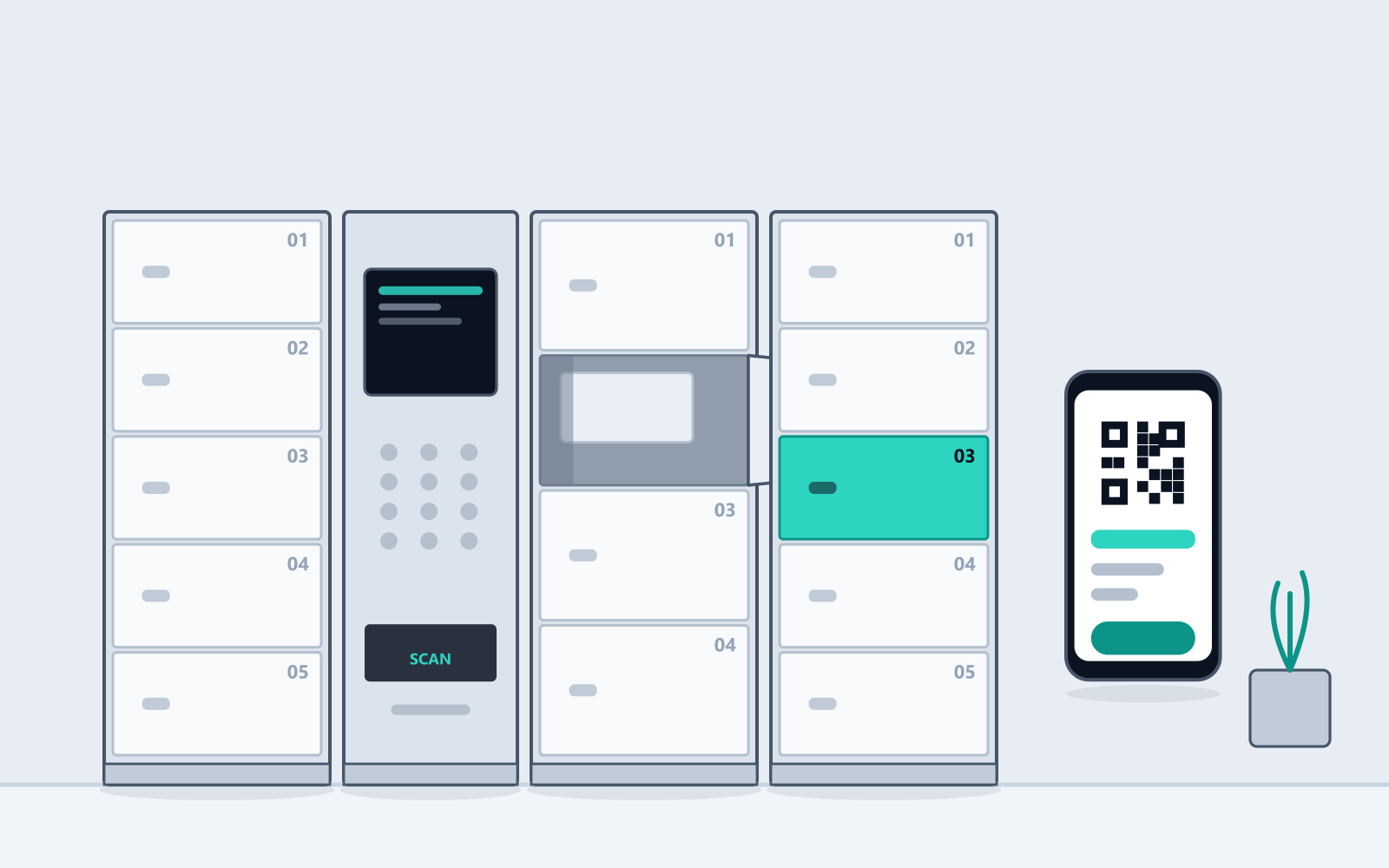
What we usually find
If none of this sounds like your site, you may not need us — and we would rather you worked that out here than after a meeting.
The management office has become a parcel room
Couriers leave deliveries at the counter, staff log them by hand, residents call to ask whether theirs has arrived, and the office carries the blame when something goes missing. None of this is in anyone's job scope, and it grows every year.
Gym and pool lockers run on residents' own padlocks
Which means padlocks left on overnight, lockers occupied indefinitely, and periodic bolt-cutting exercises that generate complaints and the occasional claim for a damaged item.
Residents have nowhere to put bulky things
Strollers, bicycles, scooters and golf bags end up in corridors, on landings and in car park lots — a fire safety issue, a by-law enforcement headache, and a recurring source of neighbour disputes the council has to arbitrate.
Anything new has to survive a council meeting
A proposal that needs capital expenditure, creates work for the managing agent, or carries a liability the council cannot quantify will not pass. The bar is not "is this a good idea" — it is "can this be tabled without creating an argument".
What changes once it is in
- Parcels handled without the office touching them, with a timestamped record of every drop and collection
- Gym and pool lockers on keypad codes, ending the padlock problem without a subscription
- Secure bulky-item storage that gets strollers and bikes out of common corridors
- Automatic reminders and a defined process for items left too long
- A monthly rental into the management fund under the managed model, with no capital outlay
- Nothing added to the managing agent's workload — residents contact us, not the office
- A written proposal drafted to be tabled at a council meeting
Which lock we would specify here
Split. Parcel lockers must be connected — a handover needs a code issued to someone who is not there and a record that they collected, and no offline lock can do either. Gym and pool lockers are the opposite case: battery keypad locks end the padlock problem outright for a fraction of the cost, and many estates need nothing more. Bulky-item stores usually sit on keyed or keypad locks. We routinely quote an estate a connected parcel bank alongside keypad gym lockers, because paying platform subscription on a pool locker buys the council nothing.
Buy, or have us fund and run it?
Most estates take the managed route, because it needs no capital vote and no line in the maintenance fund — we fund, install, insure and operate, and pay the estate a monthly rental. Structurally it is the same arrangement as the parcel boxes and vending machines many estates already host, which makes it familiar to a council. Estates that would rather own the asset outright can buy and have us maintain it; we are equally happy either way.
What we would specify
The families that come up most often for condos & mcsts. A single room usually ends up with two or three of these rather than one.
- Keyed
- Digital
- Connected (our default specification)
Member Lockers
Assigned storage, with the lock the room actually needs
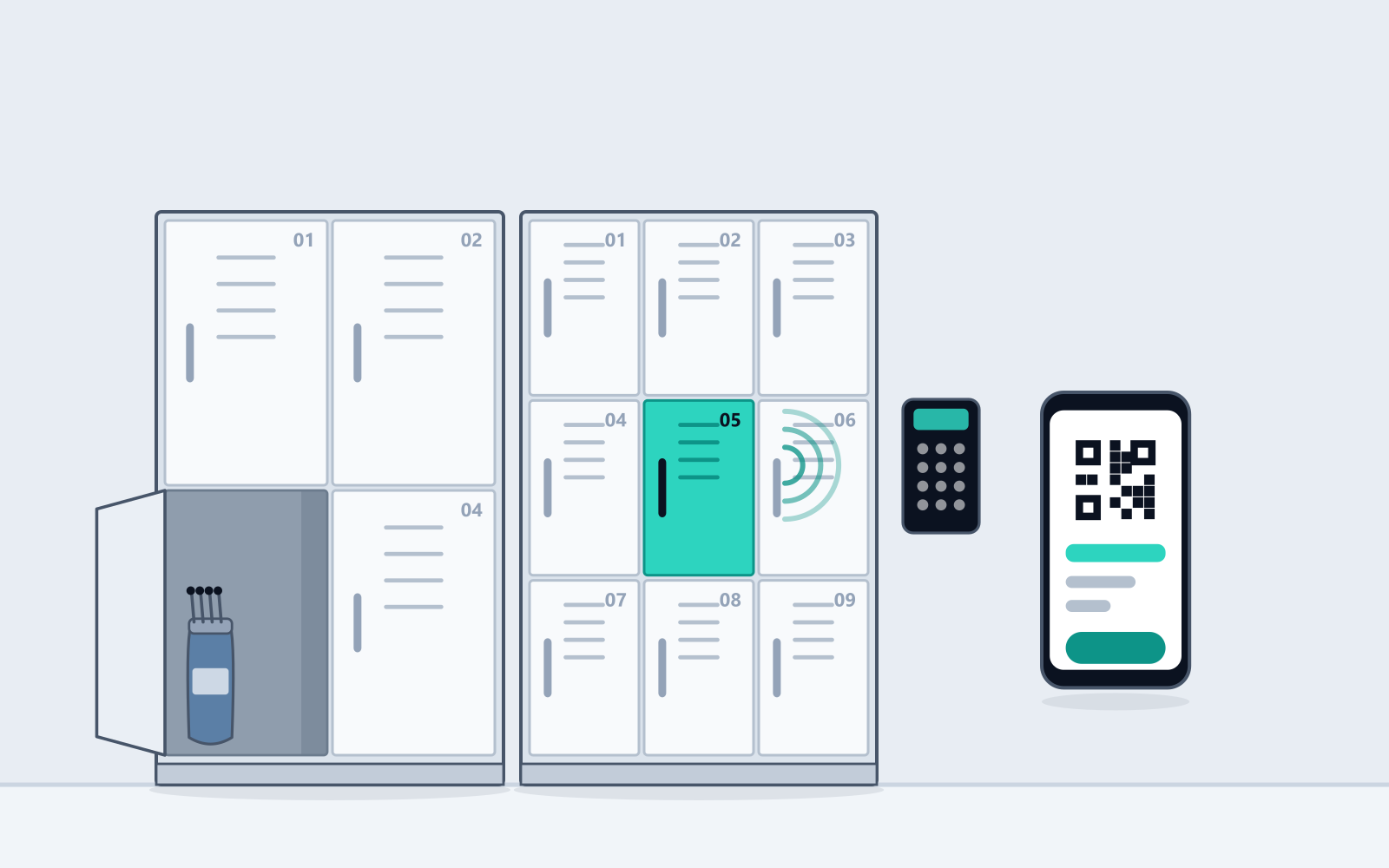
Full-height steel lockers in 2 to 24 compartments per bank, assigned to named members. Keyed, keypad or connected access — and on the Latchwork platform, fees collect themselves and access ends the day a membership lapses.
Sizes & specification →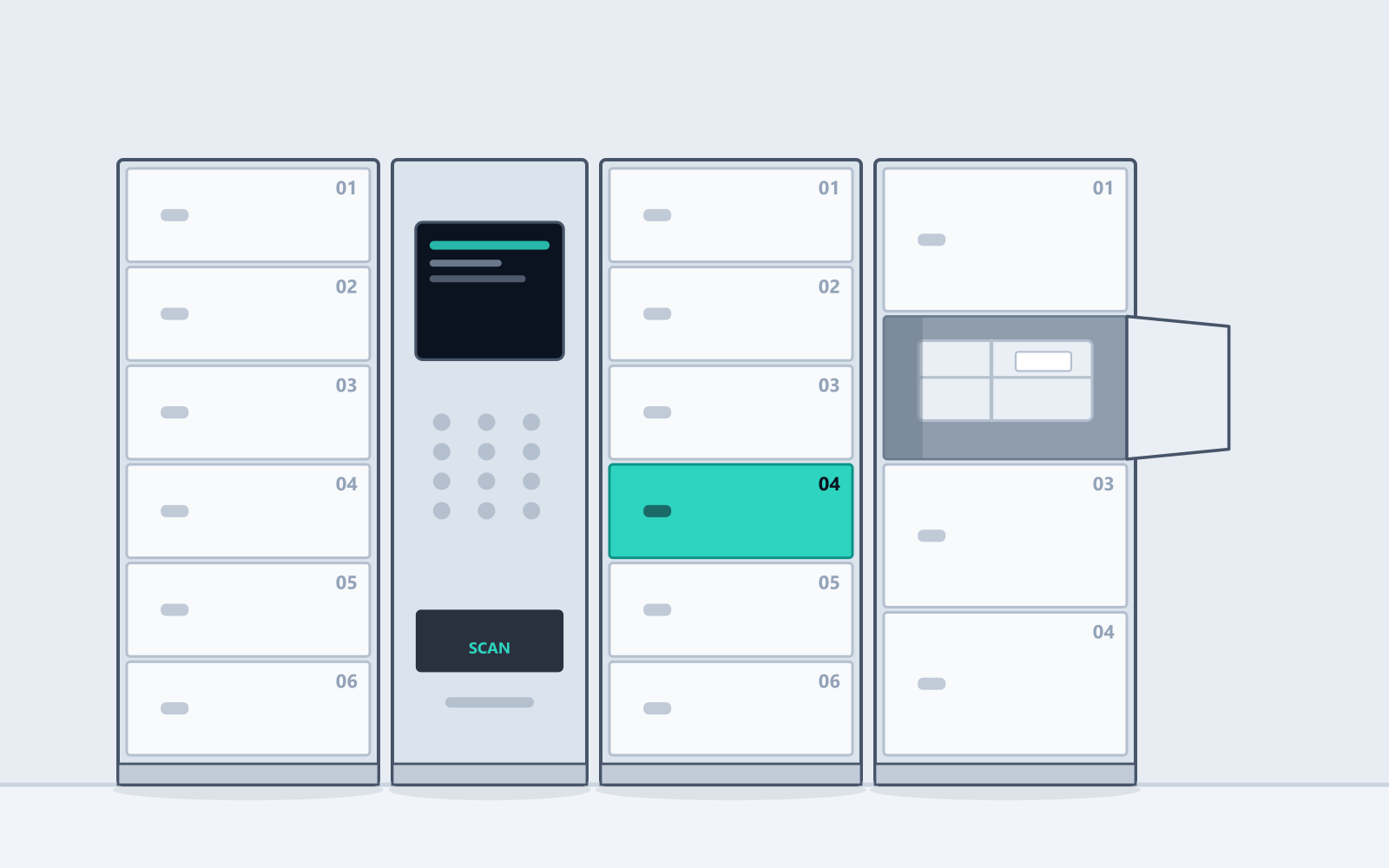
- Connected (our default specification)
Parcel & Deposit Lockers
Unattended handover, logged end to end
Multi-compartment banks with a controller, screen and keypad built in, for anything that changes hands without two people present. One party drops and locks, the other gets a code, and both ends are recorded.
Sizes & specification →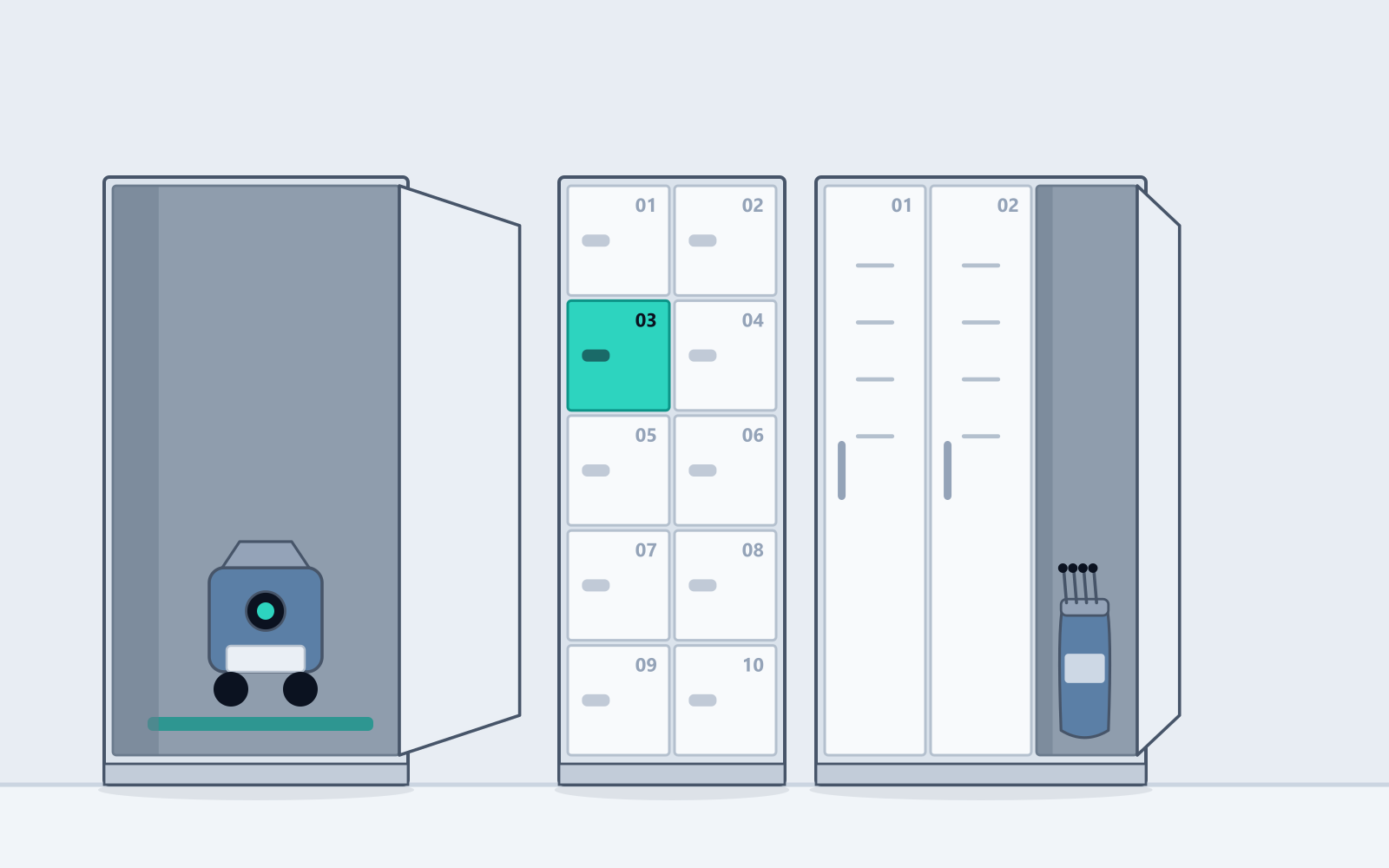
- Keyed
- Connected (our default specification)
Bespoke Equipment Lockers
Purpose-built housings for the awkward, valuable and shared
Lockers sized around one object rather than around a compartment. Where a catalogue compartment will not do, we build the housing around the item — bulky, powered, or shared between many users.
Sizes & specification →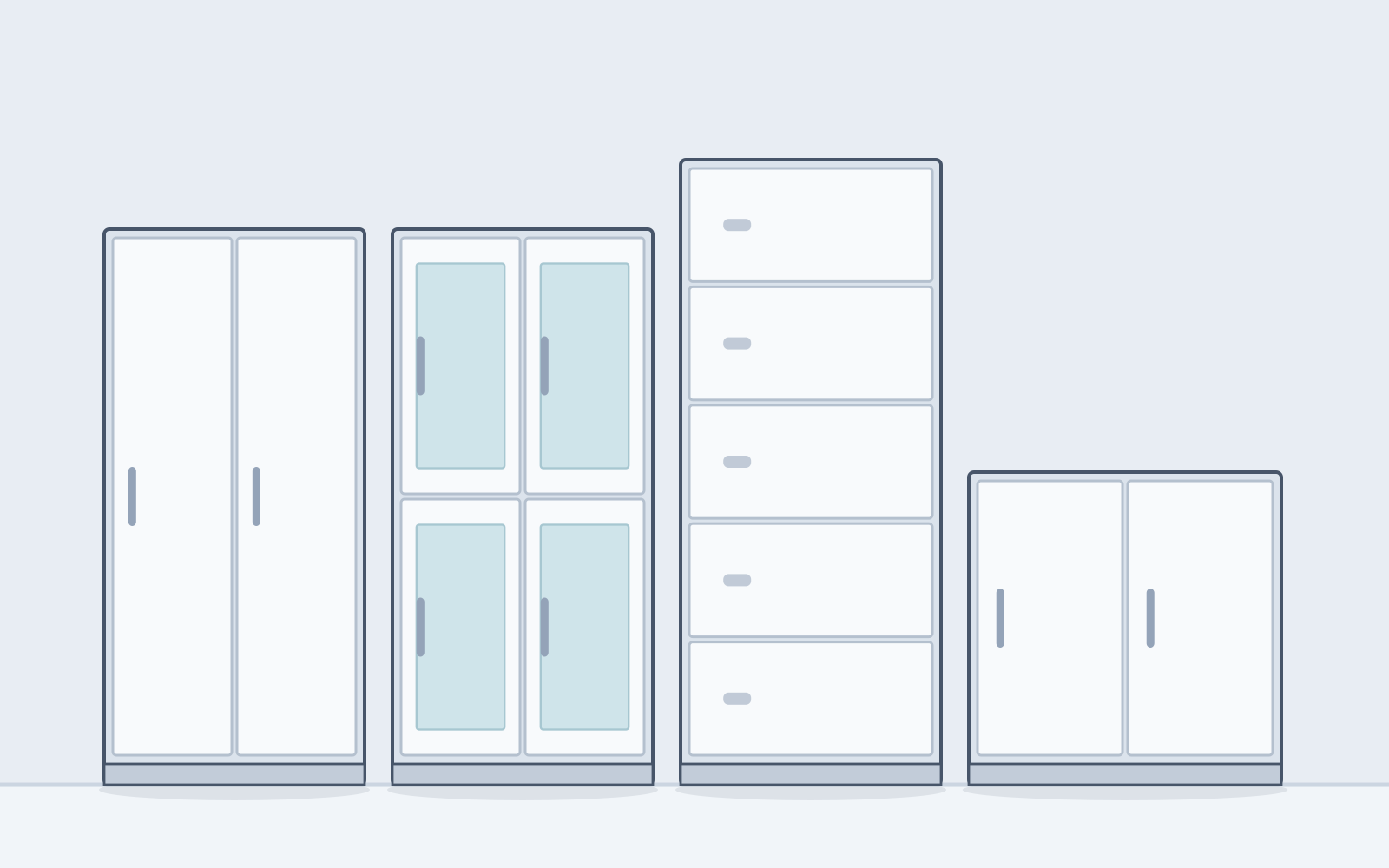
- Keyed (our default specification)
- Digital
Storage Cabinets & Cupboards
The general-purpose steel cupboard, done properly
Two-door cupboards, filing and archive cabinets, glass-fronted display units and low credenzas — the everyday storage that fills back offices, stores and clinic corridors. Unglamorous, and noticed when it is flimsy.
Sizes & specification →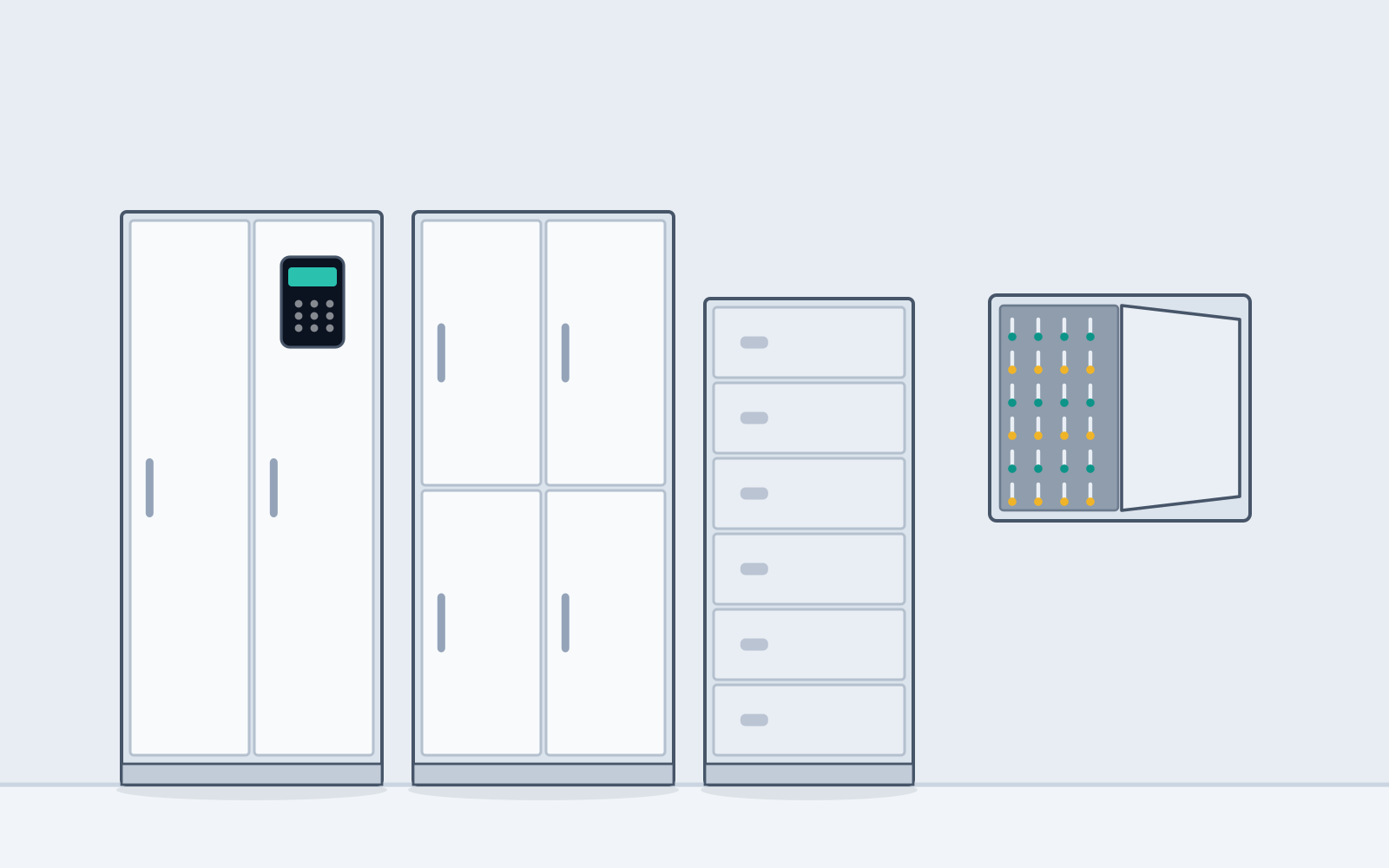
- Keyed
- Digital (our default specification)
- Connected
Secure & Document Cabinets
For records, valuables and media that must not walk
Heavier-gauge cabinets with standalone electronic, fingerprint or card locks, plus anti-magnetic media safes. For requirements that are not simply "lockable" but demonstrably controlled.
Sizes & specification →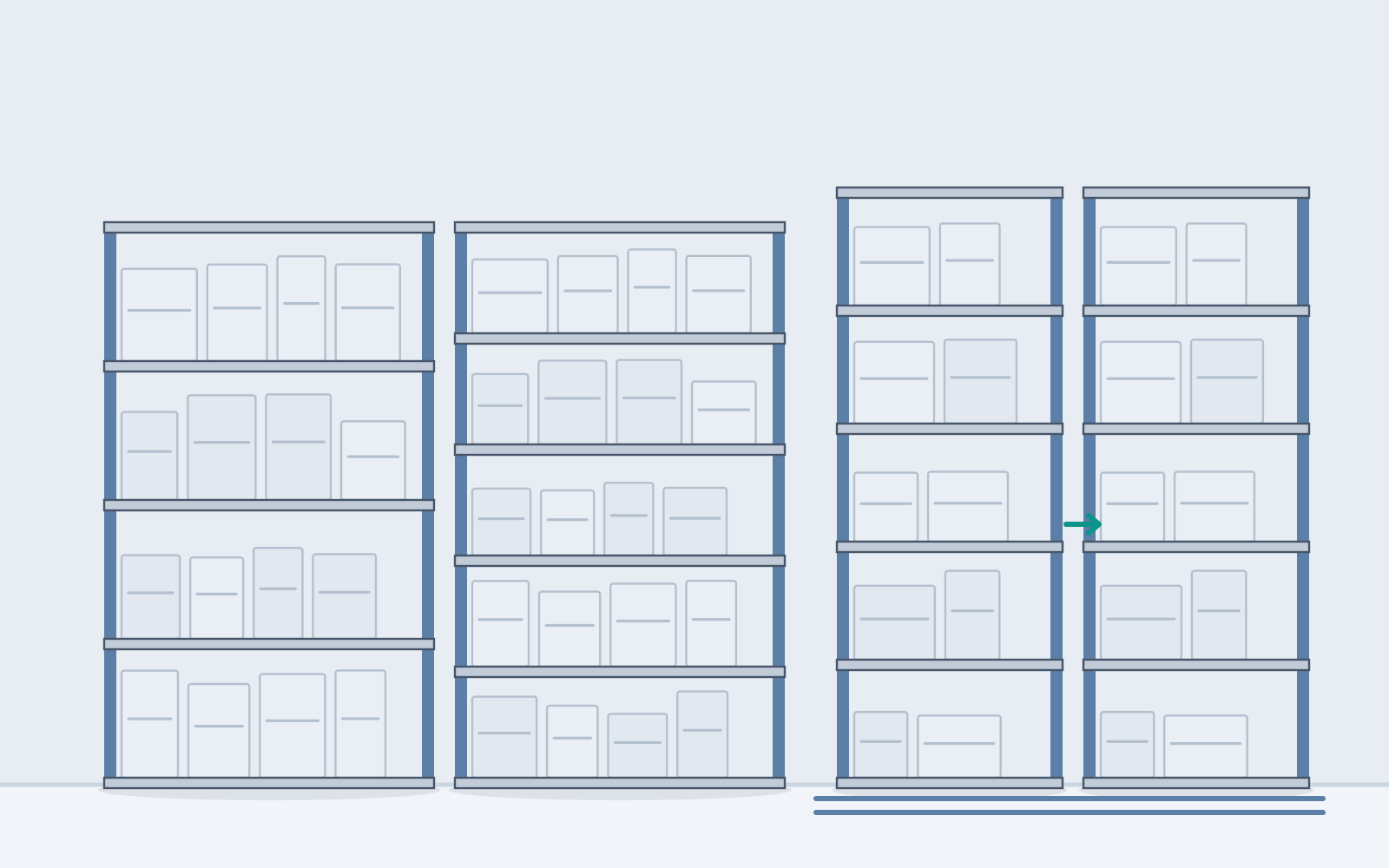
- Keyed (our default specification)
Shelving & Bulk Storage
Store rooms that hold more and stay tidy
Boltless light-duty shelving through to heavy pallet racking, plus mobile compact shelving on floor tracks that recovers the aisles. Most store rooms we survey hold half what the floor could take.
Sizes & specification →Quick answer: lockers for condominiums & mcsts in Singapore
Latchwork supplies and operates smart parcel lockers, gym and pool lockers, and bulky-item storage for Singapore condominiums and MCSTs. Residents collect parcels with a code or a QR scan, every drop and collection timestamped, so the management office stops holding parcels behind the counter. Parcel banks have to be connected for that; gym and pool lockers usually do not, and battery keypad locks end the padlock problem far more cheaply. Councils can buy outright or host under a managed arrangement.
Condominiums & MCSTs — questions we get asked
What does the estate have to provide?
Floor space and a standard 3-pin 230 V socket. No network work — the controller connects over 4G, so there is no connection to the estate's LAN. We handle day-to-day operations and user support. Under the managed model we fund the hardware, install it, insure it, service it, handle every resident query, and remove it and make good the space if the arrangement ends.
How much work does this create for the managing agent?
None, under the managed model. Residents contact us directly, we handle queries, reminders and overdue items, and we attend site on a service schedule. The office is not asked to hold keys, issue codes, log parcels or arbitrate disputes. We provide a monthly report the managing agent can put in the council pack without preparing anything.
Who is liable if a resident's item goes missing from a locker?
Under the managed model we carry the arrangement and the insurance, and the platform log establishes who opened the compartment and when — which resolves the great majority of disputes immediately. Terms and limits are set out in the agreement rather than left vague, because a council is right to ask this question before signing anything and vague answers are how estates end up carrying risk they did not intend to.
Can we trial this before committing?
Yes. Managed placements start with a three-month pilot with rental payable to the estate from day one. If the arrangement is not suitable for the estate, we will remove the lockers at our cost and make good the space, in accordance with the agreed pilot terms. You see real usage data from your own estate before the council decides anything.
Will a parcel locker bank actually be big enough?
Only if it is sized from your real volumes, and this is where most installations disappoint. We ask the office to count deliveries and note sizes for a fortnight before we specify anything. A bank that is too small fills by mid-morning and residents give up on it; an oversized bank wastes lobby space and capital. The compartment mix — how many small versus oversized — matters more than the total count.