Can You Add Keypad or Smart Locks to Existing Lockers?
When existing lockers can take keypad or smart locks instead of being replaced, which lock to choose, how long a retrofit takes, and when to replace instead.
By Latchwork Published 5 min read
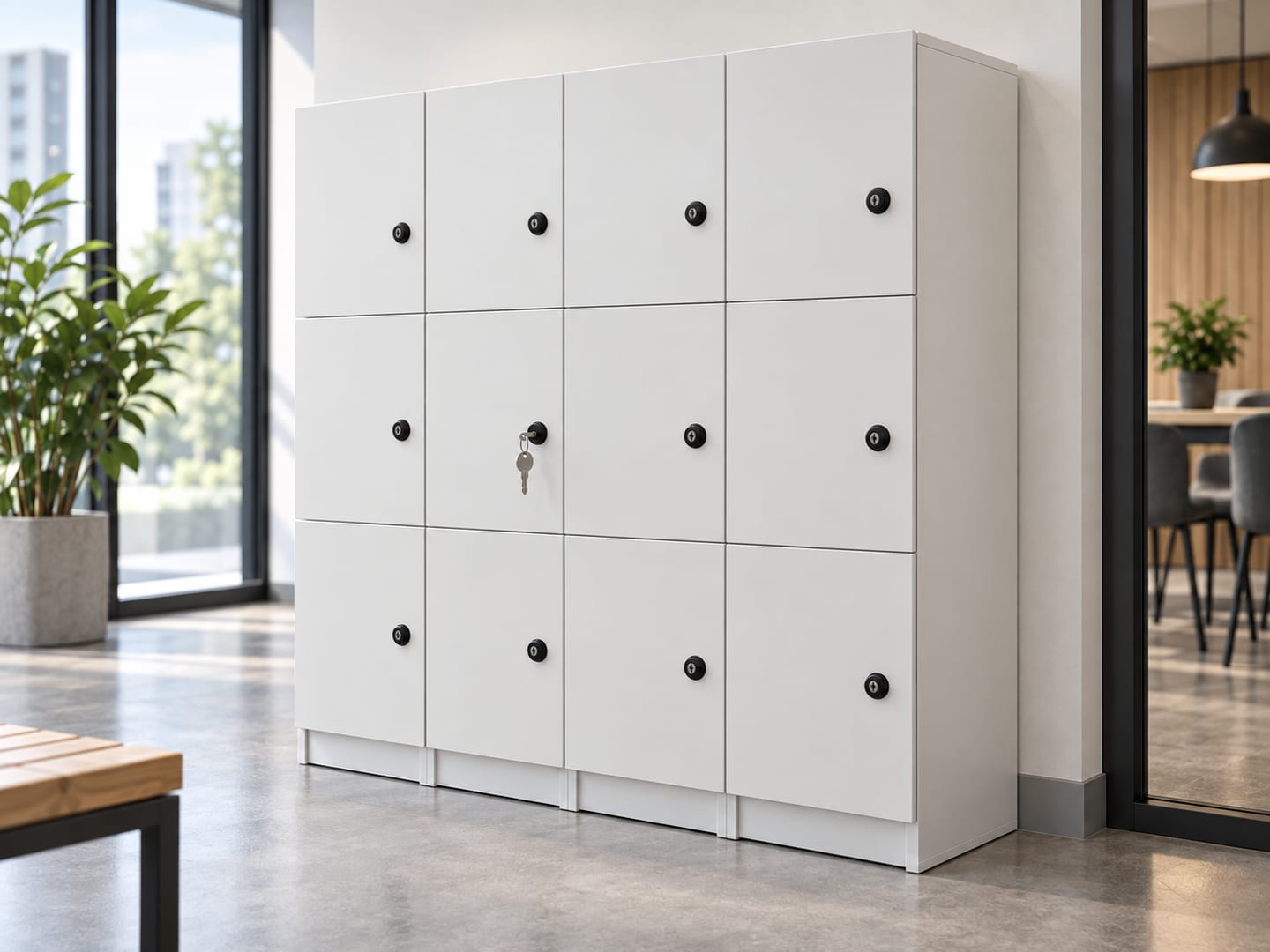
Yes: most steel lockers in sound condition can be converted to keyless locks without replacing the cabinets. A battery keypad lock drops into the hole the existing key lock already uses, and a connected smart latch goes one step further with a controller at the end of each bank. You keep the steel, which is the expensive part, and change only the mechanism.
This guide covers which keyless lock to choose, how to tell whether your lockers will take one, how a retrofit runs from photo to handover, and the cases where replacing the lockers really is the better answer.
A retrofit swaps the lock, not the locker
A cam lock is the ordinary keyed lock on most lockers: a cylinder through the door that turns a flat metal tongue behind the frame. It sits in a standard cut-out, and that cut-out is what makes a retrofit possible.
The upgrade path runs in steps, and each step reuses the same hole:
- Keyed cam lock — what most lockers have today.
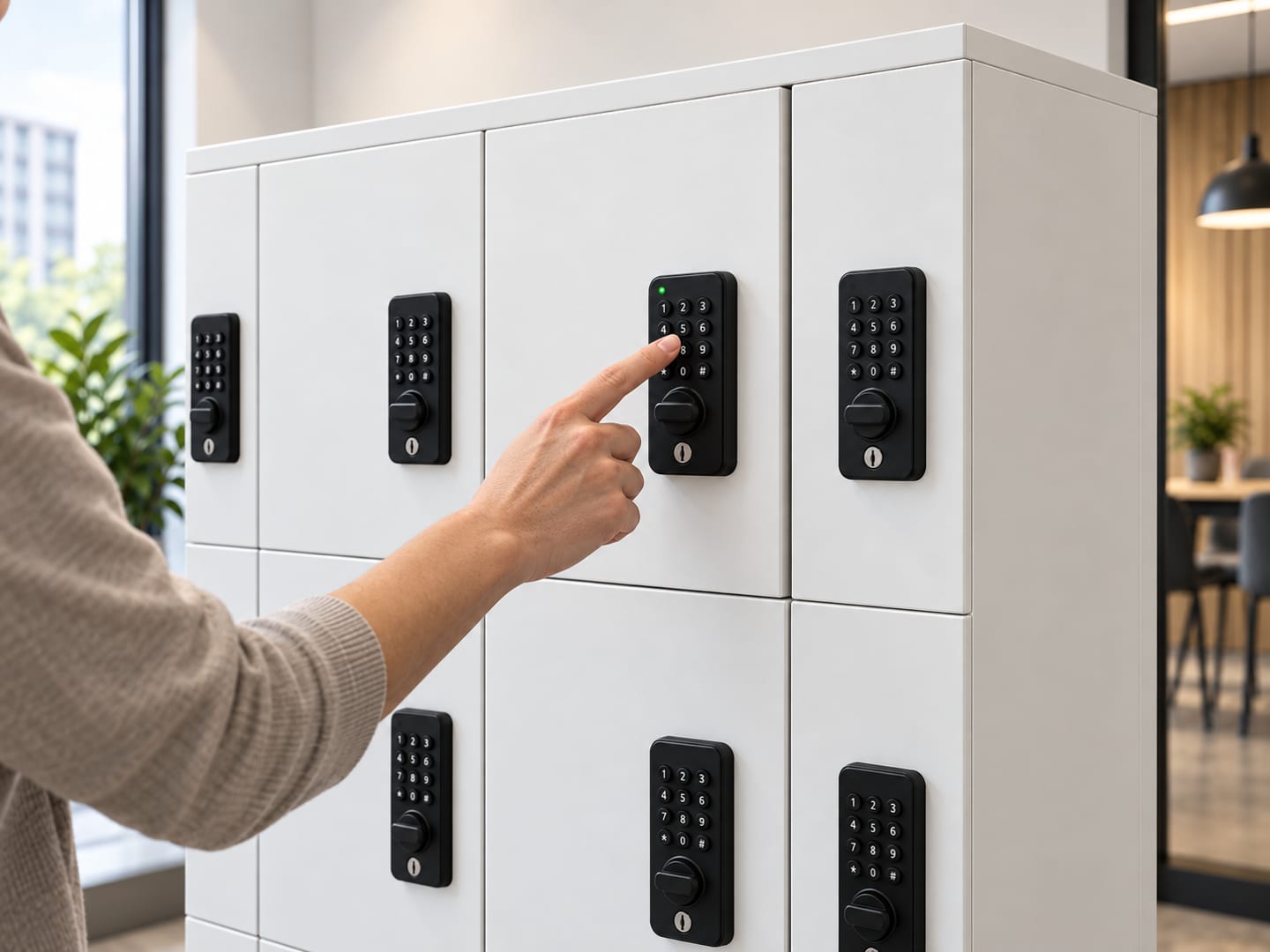
- Battery keypad lock — fits the cam lock’s cut-out directly. No wiring.
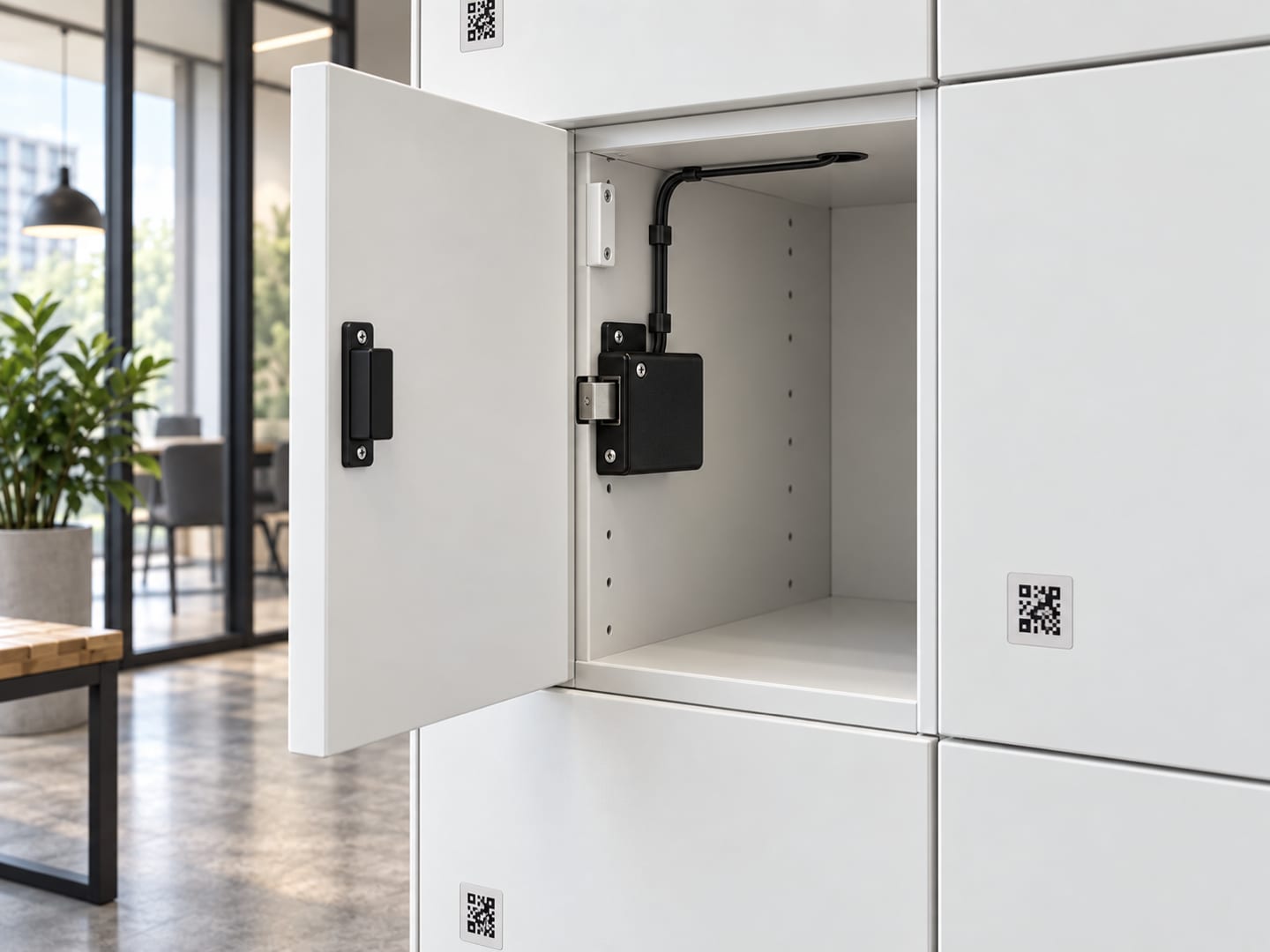
- Connected smart latch — fits the keypad lock’s position, with a controller mounted at the end of the bank.
Because the cabinet and the lock are separate decisions, a site can move up one step now and another later, one bank at a time. The compartment layout, ventilation and finish do not change when the lock does. That separation is the basis of Latchwork’s lock upgrade path: the lock is the part you are most likely to want to change.
Choose the lock that solves your actual problem
Pick the cheapest lock that fixes the problem you have now. For most gyms, schools and staff changing rooms that is a battery keypad lock; connected access earns its extra cost only when you need something an offline lock cannot do.
| Battery keypad lock | Connected smart access | |
|---|---|---|
| How it opens | User sets their own code, or holds a fixed code, card or fingerprint | QR scan, PIN on the bank keypad, existing access card, or staff remote release |
| Power and network | Batteries in each lock, replaced about yearly | One standard 3-pin socket per bank; controller connects over 4G |
| Recurring cost | None | Annual platform subscription per bank |
| Solves | Lost keys, key deposits, keys at the front desk | All of that, plus access logs, fee collection and automatic release |
| Cannot do | Log openings, collect fees, or release a locker at closing time | Justify itself on a store cupboard or on fewer than about 20 compartments |
Four questions settle it in almost every case:
- Are keys going missing? A keypad lock ends that outright.
- Do day lockers get squatted overnight? Only connected access can release them automatically at closing. A keypad lock has no clock and no idea whose code is inside.
- Are you charging for lockers? Automatic billing, and access that ends when payment lapses, need connected access.
- Do you need to know who opened a door, and when? Only connected access keeps a log.
If the answer to the last three is no, buy keypad locks. The gym and studio lockers page walks through the same decision for day-use changing rooms, where it comes up most.
When a retrofit works, and when to replace instead
A retrofit works when the doors are steel, in sound condition and reasonably rigid, the existing lock is a standard cam lock in a standard cut-out, and the bank layout still suits how the room is used. Connected access also needs a socket within reach of the end of each bank.
Replacement is the better answer when:
- The doors are thin-gauge and flex. An electronic latch will not hold alignment on a door that bends.
- Corrosion at the base has reached the door frames. Common in older wet-area rooms.
- The lockers are timber, or carry a non-standard proprietary lock. Neither takes a standard kit reliably.
- The compartments are the wrong size for the room’s real use. A new lock on a locker nobody can fit a bag into is still an unused locker.
How a Latchwork retrofit runs
A retrofit is quick because nothing is fabricated. The sequence:
- Photos. A photo of the whole bank and a close-up of one lock usually tells us which kit applies.
- Survey. A free visit to check a sample door, count the doors and confirm the lock type each bank needs.
- Quotation. Lock hardware and installation, with keypad and connected options priced side by side where both are plausible.
- Kits arrive in two to three weeks. New lockers made to order take six to eight weeks, so a retrofit also wins on programme.
- Installation, about a day per room. Larger rooms are done bank by bank so part of the room stays in use.
- Handover. For keypad locks, a programming card and master override keys. For connected access, dashboard accounts and QR labels on each door.
A retrofit costs a fraction of new lockers
A retrofit costs a fraction of replacing the lockers, because the steel is the expensive part of a locker and a retrofit keeps it. Keypad locks carry no recurring fee at all. Connected access adds hardware per compartment plus an annual subscription per bank, which is why it pays back where fees are being collected or day lockers need to clear themselves, and not on a store cupboard.
Most rooms end up mixed. Assigned member lockers on connected access, day-use banks on keypad locks and staff cupboards left on their cam locks is a normal specification, and there is no requirement to run one lock type throughout. The pricing page sets out what moves the price.
What to send for a quick answer
Send a photo of the bank, a close-up of one lock, the number of doors, and one sentence on what is going wrong: lost keys, squatted lockers, or fees nobody collects. That is usually enough for Latchwork to say whether your lockers can be retrofitted, which lock they should take, and whether a free site survey is worth booking.
Where this applies
Quick answer: Can existing lockers be converted to keypad or smart locks?
Most sound steel lockers can be converted to keyless locks without replacing the cabinets. A battery keypad lock fits the existing cam lock cut-out with no wiring or subscription; a connected smart latch adds a controller and one 3-pin socket per bank. Latchwork surveys a sample door first, supplies retrofit kits in two to three weeks, and fits about one locker room a day.
- Kit lead time
- 2–3 weeks
- On site
- About a day per room
- Keypad lock needs
- Batteries only
- Smart access needs
- One socket per bank
Questions people also ask
How long does it take to retrofit keypad locks on existing lockers?
A Latchwork lock retrofit takes two to three weeks from order for the kits and about a day per locker room on site. Larger rooms can be done bank by bank, so part of the room stays in use throughout.
Do keypad locker locks need wiring or a power point?
A battery keypad locker lock needs no wiring, no socket, no network and no subscription. Each lock runs on its own batteries, which are typically replaced about once a year, and staff manage it with a programming card and an override key.
Can timber lockers be fitted with keypad locks?
Timber lockers are generally not a good candidate for a Latchwork retrofit, and neither are thin steel doors that flex, frames corroded at the base or lockers with a non-standard proprietary lock. In those cases Latchwork recommends replacement rather than a kit likely to fail within a year.
What happens if a keypad locker lock battery goes flat?
Every locker Latchwork fits has a mechanical master override, so a flat battery, a forgotten code or a failed latch never traps belongings. Staff open the door with the master key, then replace the battery or reset the code.
Can keypad locks be upgraded to smart access later?
A keypad lock cut-out accepts a connected latch with a controller at the end of the bank, so lockers retrofitted with Latchwork keypad locks can move to connected smart access later, one bank at a time, without replacing any steel.